


David B. Olawade a b c, Jennifer Teke b d, Khadijat K. Adeleye e, Kusal Weerasinghe b, Momudat Maidoki f, Aanuoluwapo Clement David-Olawade g
a Department of Allied and Public Health, School of Health, Sport and Bioscience, University of East London, London, United Kingdom
b Department of Research and Innovation, Medway NHS Foundation Trust, Gillingham ME7 5NY, United Kingdom
c Department of Public Health, York St John University, London, United Kingdom
d Faculty of Medicine, Health and Social Care, Canterbury Christ Church University, United Kingdom
e Elaine Marieb College of Nursing, University of Massachusetts, Amherst, MA, USA
f Department of General Surgery, Medway NHS Foundation Trust, Gillingham ME7 5NY, United Kingdom
g Endoscopy Unit, Glenfield Hospital, NHS Trust, University Hospitals of Leicester, Leicester, United Kingdom
Abstract
In vitro fertilization (IVF) has been a transformative advancement in assisted reproductive technology. However, success rates remain suboptimal, with only about one-third of cycles resulting in pregnancy and fewer leading to live births. This narrative review explores the potential of artificial intelligence (AI), machine learning (ML), and deep learning (DL) to enhance various stages of the IVF process. Personalization of ovarian stimulation protocols, gamete selection, and embryo annotation and selection are critical areas where AI may benefit significantly. AI-driven tools can analyze vast datasets to predict optimal stimulation protocols, potentially improving oocyte quality and fertilization rates. In sperm and oocyte quality assessment, AI can offer precise, objective analyses, reducing subjectivity and standardizing evaluations. In embryo selection, AI can analyze time-lapse imaging and morphological data to support the prediction of embryo viability, potentially aiding implantation outcomes. However, the role of AI in improving clinical outcomes remains to be confirmed by large-scale, well-designed clinical trials. Additionally, AI has the potential to enhance quality control and workflow optimization within IVF laboratories by continuously monitoring key performance indicators (KPIs) and facilitating efficient resource utilization. Ethical considerations, including data privacy, algorithmic bias, and fairness, are paramount for the responsible implementation of AI in IVF. Future research should prioritize validating AI tools in diverse clinical settings, ensuring their applicability and reliability. Collaboration among AI experts, clinicians, and embryologists is essential to drive innovation and improve outcomes in assisted reproduction. AI’s integration into IVF holds promise for advancing patient care, but its clinical potential requires careful evaluation and ongoing refinement.
Keywords
In-vitro fertilization; Artificial intelligence; Machine learning; Deep learning (DL); Gamete selection; Embryo annotation
1. Introduction
In-vitro fertilization (IVF) has been a groundbreaking advancement in assisted reproductive technology since the birth of the first “test-tube baby” in 1978 1. This technique has offered hope to millions of couples struggling with infertility, providing an alternative pathway to parenthood. IVF has evolved significantly over the past four decades, incorporating various technological advancements to enhance its efficacy 2. However, despite these innovations, the success rates of IVF remain suboptimal, with only approximately one-third of cycles resulting in pregnancy and an even smaller proportion leading to the birth of a healthy baby. It is important to note that while artificial intelligence (AI) offers the potential to optimize certain aspects of IVF, clinical validation of AI’s impact on improving live birth rates remains limited.
The challenges faced in IVF involve complex biological, medical, and technical factors 3,4. One of the primary hurdles is the variability in patient response to ovarian stimulation protocols 5,6. Personalizing these protocols to suit individual patient profiles is crucial for optimizing the quantity and quality of oocytes retrieved 7,8,9. However, AI is not capable of directly enhancing oocyte quality; instead, it can help in tailoring stimulation protocols by identifying predictive factors for optimal responses 10,11. Even with personalized approaches, predicting patient response remains challenging, leading to inconsistent outcomes. Furthermore, the selection of high-quality gametes and embryos is essential for improving fertilization rates and embryo viability 12,13, yet current methods heavily rely on subjective assessments by embryologists.
To address these complexities, AI encompasses various computational techniques that enable machines to mimic human intelligence 14. Machine learning (ML), a subset of AI, involves the development of algorithms that can learn from and make predictions based on data 15. Deep learning (DL), a more advanced subset of ML, utilizes neural networks with multiple layers to analyze complex patterns in large datasets 16. These technologies have already demonstrated potential in various medical fields, including radiology 17, oncology, and genomics by providing precise, data-driven insights that enhance clinical decision-making 16. However, the application of AI in IVF remains in its early stages, and while early results are promising, comprehensive clinical validation is still required before AI can be routinely integrated into IVF practices 18.
Recent studies have shown that AI, ML, and DL present opportunities to transform IVF practices 18,19, 20,21. Integrating AI into IVF can potentially address several critical areas that influence the procedure’s success. For instance, AI-driven tools can analyze vast amounts of patient data to identify patterns and correlations that may not be apparent to human practitioners. This capability can enhance the personalization of ovarian stimulation protocols, ensuring that each patient receives the most suitable treatment plan 11. Additionally, AI can improve gamete and embryo selection by providing objective assessments based on detailed morphological and genetic data 22,23, reducing the subjectivity and variability associated with manual evaluations. However, it is crucial to acknowledge that while AI can standardize and streamline certain procedures, its direct effect on improving IVF success rates requires further large-scale clinical trials 24.
Moreover, AI can play a significant role in the quality control of IVF laboratories 24,25. By continuously monitoring key performance indicators and laboratory conditions, AI systems can ensure that the highest standards are maintained, thus increasing the consistency and reliability of IVF outcomes. The scheduling and workflow optimization capabilities of AI can also enhance the efficiency of IVF procedures, minimizing delays and ensuring the timely handling of gametes and embryos 26. Yet, the impact of these efficiencies on clinical outcomes like pregnancy and live birth rates remains to be fully validated in a broader clinical context 25.
Despite significant advancements in assisted reproductive technology, the success rates of in-vitro fertilization (IVF) remain disappointingly low, with only about one-third of cycles resulting in pregnancy and even fewer leading to live births. This highlights a pressing need for more effective and reliable methods to enhance IVF outcomes. The rationale for this review is rooted in the potential of artificial intelligence (AI), machine learning (ML), and deep learning (DL) to address these challenges by providing objective, data-driven tools that can optimize various stages of the IVF process. The novelty of this review lies in its comprehensive examination of how these advanced technologies can be integrated into IVF practices to improve patient-specific stimulation protocols, gamete and embryo selection, and overall laboratory efficiency. The primary objectives of this narrative review are to explore current evidence supporting the use of AI, ML, and DL in IVF, to identify the potential benefits and limitations of these technologies, and to outline future directions for research and clinical implementation. This review aims to contribute to ongoing efforts to enhance IVF success rates and reduce patient emotional and financial burdens by synthesizing the latest findings and proposing new avenues for innovation. Fig. 1 below highlights different applications of AI integrated into IVF practices.

2.1. Literature search
A comprehensive literature search was conducted to gather relevant studies and articles on the application of artificial intelligence (AI), machine learning (ML), and deep learning (DL) in in-vitro fertilization (IVF). The literature databases searched included PubMed, Scopus, Web of Science, and Google Scholar. The search was performed using a combination of keywords and MeSH terms, such as “artificial intelligence,” “machine learning,” “deep learning,” “in-vitro fertilization,” “IVF,” “ovarian stimulation,” “oocyte quality,” “embryo selection,” “sperm selection,” and “IVF outcomes.” The search was limited to articles published in English from January 2000 to July 2024 to capture the most recent and relevant advancements in the field.
While this review adhered to a structured methodology, it is important to clarify that it is a narrative review, not a systematic one. The goal was to explore and synthesize emerging themes and advancements in the application of AI in IVF, rather than to evaluate the efficacy of interventions systematically. Thus, the approach prioritized conceptual synthesis and thematic organization over strict quantitative analysis.
2.2. Inclusion and exclusion criteria
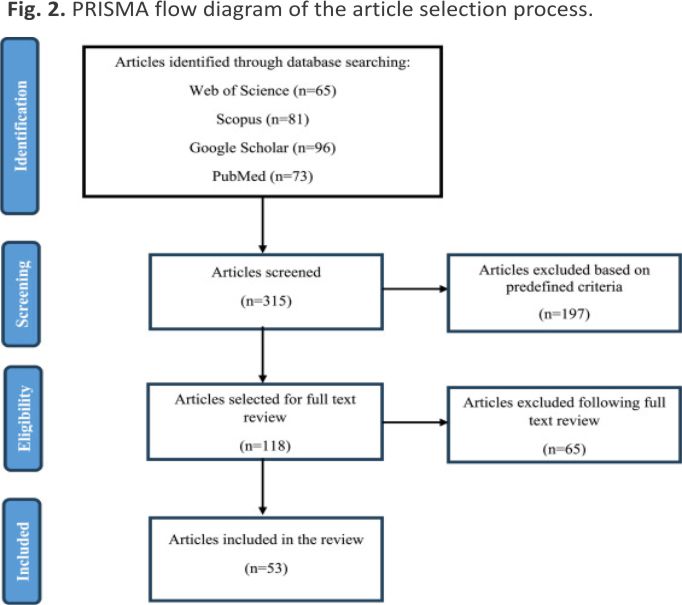
The review included peer-reviewed articles and reviews that addressed the use of AI, ML, and DL in various aspects of IVF. Relevant studies discussed AI’s impact on ovarian stimulation protocols, gamete selection, embryo assessment, and IVF laboratory quality control. Articles providing data on AI-driven IVF outcomes, such as pregnancy rates, live birth rates, and embryo viability, were considered. The search initially yielded 315 articles. After reviewing titles and abstracts, 118 articles were deemed potentially relevant. Following a detailed full-text review, 53 studies were included based on inclusion criteria, as summarized in Fig. 2. Articles not directly related to IVF, those focusing on other reproductive technologies, non-English publications, and studies without a clear focus on applying AI, ML, or DL in IVF were excluded.
As this review is a narrative synthesis, it does not systematically evaluate the risk of bias for included studies. However, efforts were made to ensure reliability by selecting studies published in peer-reviewed journals and critically appraising their methodological rigor during data extraction.
2.4. Synthesis of results
Findings from the selected studies were synthesized narratively, focusing on conceptual and thematic insights into AI applications across the IVF process. The studies were grouped based on key aspects of IVF, including ovarian stimulation, gamete selection, embryo selection, and laboratory management. The themes identified during data extraction were structured to reflect critical areas of AI integration in IVF including personalization of ovarian stimulation protocols, gamete and embryo selection, quality control in IVF laboratories, and workflow optimization. The narrative synthesis critically analyzed AI applications’ potential benefits and limitations, aiming to provide a comprehensive overview of current evidence and highlight areas for future research.
3. Personalization of ovarian stimulation protocols
Ovarian stimulation protocols are critical to in-vitro fertilization (IVF) success as they optimize the number and quality of oocytes retrieved 5,27. These protocols typically involve the administration of gonadotrophins to stimulate the ovaries to produce multiple follicles and to retrieve a sufficient number of mature oocytes that can be fertilized to create viable embryos 28. Personalization of ovarian stimulation has become increasingly important due to the variability in patient characteristics such as age, ovarian reserve, and hormonal profile 29,30. For instance, younger patients with a higher ovarian reserve may require different stimulation protocols compared to older patients or those with diminished ovarian reserve. Despite personalized approaches, predicting individual patient responses to stimulation remains challenging. Suboptimal stimulation can lead to various issues, including ovarian hyperstimulation syndrome (OHSS), poor oocyte quality, and, ultimately, lower IVF success rates 31.
Artificial intelligence (AI) can potentially revolutionize the personalization of ovarian stimulation protocols by leveraging vast datasets and advanced analytical techniques 21,32. Recent advances in AI, particularly in machine learning (ML) and deep learning (DL), have shown promise in improving the accuracy and efficacy of these protocols. AI can analyze extensive datasets comprising patient characteristics, historical responses to stimulation protocols, and IVF outcomes 33,34. AI can provide insights that may elude traditional analysis by identifying patterns and correlations within these datasets 35. For instance, AI can identify subtle correlations between specific patient profiles and their responses to different stimulation protocols, enabling more precise treatment tailoring.
Machine learning algorithms can develop predictive models to estimate each patient’s optimal type and dose of gonadotropins 36. These models consider various factors, including age, body mass index (BMI), antral follicle count (AFC), and anti-Müllerian hormone (AMH) levels. AI models can predict the best day for monitoring a patient, trigger day options, and the number of oocytes 11. AI systems can integrate data from previous IVF cycles to refine predictions for future treatments. This iterative learning process allows the AI to improve its recommendations continuously. By incorporating historical patient data, AI can enhance the personalization of stimulation protocols, resulting in improved clinical outcomes. Moreover, AI can also facilitate real-time adjustments to stimulation protocols 37. By monitoring patients’ responses during the stimulation phase, AI algorithms can recommend modifications to the dosage or type of gonadotropins. This dynamic approach ensures that the protocols are constantly optimized to achieve the best possible outcomes, reducing the incidence of complications like OHSS and enhancing overall treatment efficacy 21.
4. Gamete selection
Gamete selection is a pivotal step in the in-vitro fertilization (IVF) process, significantly impacting fertilization success rates and subsequent embryo development 38. Accurately selecting high-quality sperm and oocytes can enhance the likelihood of successful fertilization, implantation, and a successful pregnancy 39. While effective to some extent, traditional methods of gamete selection are often subjective and reliant on embryologists’ expertise 40. Advances in artificial intelligence (AI) and deep learning (DL) offer the potential to revolutionize gamete selection by providing objective, data-driven tools that can improve the accuracy and consistency of these assessments 41.
4.1. Sperm classification and selection
Traditional sperm selection methods rely heavily on manual assessment and basic laboratory techniques such as visual evaluation of motility and morphology using microscopy 42,43. These methods are inherently subjective and can vary significantly between practitioners. Manual assessment is also time-consuming and may not always accurately predict the fertilization potential of sperm 42. AI and DL technologies can significantly enhance sperm selection by analyzing motility, morphology, and other relevant parameters with high precision 24,44. While some studies indicate comparable outcomes between AI-based and traditional methods, DL models, trained on large datasets of sperm images and associated outcomes, can classify sperm quality more accurately than traditional methods 45,46. These models can identify subtle morphological features and motility patterns that correlate with successful fertilization. For instance, DL algorithms can analyze high-resolution video footage of sperm movement to assess motility parameters such as velocity, linearity, and amplitude of lateral head displacement 47. By providing a more objective and precise assessment of sperm quality, AI and DL can improve the chances of selecting the best sperm for fertilization. This not only increases the likelihood of successful fertilization but also enhances the overall quality of the resulting embryos. AI-driven sperm selection can be particularly beneficial in cases of male factor infertility, where the selection of the highest-quality sperm is critical for achieving positive outcomes.
4.2. Oocyte quality assessment
Oocyte quality is a crucial determinant of successful fertilization and subsequent embryo development 48,49. Traditional assessment methods for oocyte quality primarily rely on morphological criteria observed under a microscope, such as the appearance of the zona pellucida, cytoplasm, and polar body 50. However, these assessments are subjective and can vary between embryologists, leading to inconsistencies in oocyte quality assessment. AI offers a transformative approach to oocyte quality assessment by providing objective analyses based on high-resolution images of oocytes 11,51. Advanced image analysis techniques powered by AI can identify subtle features that correlate with oocyte quality, which may not be discernible through manual evaluation. For example, AI algorithms can assess the ooplasm’s homogeneity, the zona pellucida’s integrity, and the presence of cytoplasmic inclusions or vacuoles, all of which are important indicators of oocyte health.
Furthermore, AI can integrate data from multiple imaging modalities, such as time-lapse microscopy and confocal imaging, to comprehensively assess oocyte quality. Time-lapse imaging allows continuous monitoring of oocyte development, providing dynamic information that AI can analyze to predict developmental potential 52. By combining morphological data with dynamic developmental patterns, AI can enhance the accuracy of oocyte quality assessment, leading to better fertilization rates and higher-quality embryos.
4.3. Integration of genetic data
In addition to morphological assessments, the integration of genetic data into AI-driven gamete selection processes holds significant promise. Preimplantation genetic testing (PGT) can identify chromosomal abnormalities and genetic disorders in oocytes and embryos 53. AI algorithms can analyze genetic data alongside morphological and developmental information to provide a more holistic assessment of gamete quality 54. This integrated approach can improve the selection of genetically normal gametes, thereby increasing the chances of a successful pregnancy and reducing the risk of genetic disorders.
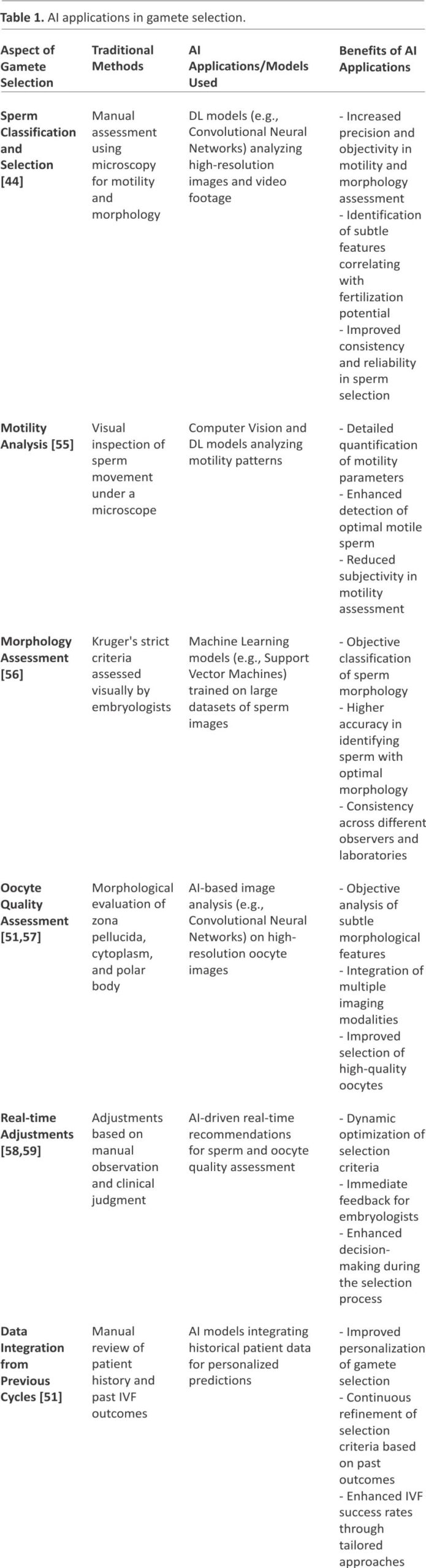
Table 1 provides an overview of how AI applications and models can enhance the various aspects of gamete selection in IVF, improving precision, objectivity, and overall outcomes.
5. Embryo annotation and selection
Embryo annotation and selection are critical steps in the in-vitro fertilization (IVF) process, significantly influencing the likelihood of successful implantation and pregnancy 60,61. Traditional methods for selecting embryos primarily rely on morphological assessment, where embryologists visually evaluate the embryos under a microscope. This assessment typically considers cell number, symmetry, and fragmentation factors. Some clinics also incorporate genetic testing, such as preimplantation genetic testing (PGT), to identify chromosomal abnormalities 62,63. However, these methods are inherently subjective and can vary between embryologists, leading to inconsistent and sometimes inaccurate predictions of embryo viability 64.
5.1. Traditional methods
Morphological assessment of embryos involves examining their appearance at various stages of development 64. On Day 3, embryos are usually evaluated based on the number and regularity of blastomeres and the degree of fragmentation. On Day 5, the focus shifts to the formation and quality of the blastocyst, including the appearance of the inner cell mass and the trophectoderm 65. While these assessments provide valuable information, they do not always correlate with the embryo’s ability to implant and develop into a healthy pregnancy. These evaluations are subjective, with significant variability between embryologists’ assessments. Genetic testing, such as PGT, can provide additional insights into the chromosomal status of embryos 53. By identifying aneuploidies, genetic testing can help select embryos with the highest potential for successful implantation 66. However, PGT is invasive, expensive, and not universally available. Moreover, it cannot assess an embryo’s functional potential beyond its chromosomal makeup, leaving gaps in predicting overall viability.
5.2. AI in embryo selection
Artificial intelligence (AI) and deep learning (DL) technologies have the potential to revolutionize embryo selection by providing more objective, accurate, and comprehensive assessments 14,15. AI can analyze large datasets of time-lapse imaging and morphological data to predict embryo viability more precisely than traditional methods. Time-lapse imaging systems capture continuous images of embryos as they develop, providing a detailed record of their morphological changes. AI algorithms can analyze these time-lapse videos to identify patterns and developmental milestones associated with successful implantation and development 67. AI can provide a more dynamic and nuanced assessment of embryo quality by examining parameters such as cleavage patterns, blastocyst formation, and the timing of key developmental events. Recent studies have demonstrated that AI models analyzing time-lapse imaging can significantly improve the accuracy of embryo viability predictions 23.
For instance, AI can detect subtle morphological changes and dynamic behaviors difficult for human observers to discern. These models can predict implantation potential with higher accuracy, leading to better embryo selection for transfer and increased implantation rates.
In addition to time-lapse imaging, AI can enhance the traditional morphological assessment of embryos. Deep learning models, particularly convolutional neural networks (CNNs), can be trained on large datasets of embryo images to recognize features that correlate with high viability 68. These models can analyze static images of embryos at various stages of development, providing an objective assessment that reduces inter-embryologist variability. AI-driven morphological assessments can identify features such as blastomere symmetry, cell junction quality, and the degree of fragmentation with greater precision than manual evaluations. By combining these assessments with time-lapse imaging data, AI provides a comprehensive analysis that encompasses both static and dynamic aspects of embryo development.
AI’s ability to integrate and analyze diverse datasets allows for the development of predictive models that can forecast embryo viability 69. These models can incorporate morphological data, time-lapse imaging, and genetic information to provide a holistic assessment. By identifying embryos with the highest potential for successful implantation and development, AI can increase implantation rates and reduce the number of cycles required to achieve a successful pregnancy 22. For example, machine learning algorithms can be trained on historical IVF data, including patient demographics, stimulation protocols, and outcomes. These models can then predict the likelihood of success for new patients, helping clinicians make more informed decisions about embryo selection and transfer.
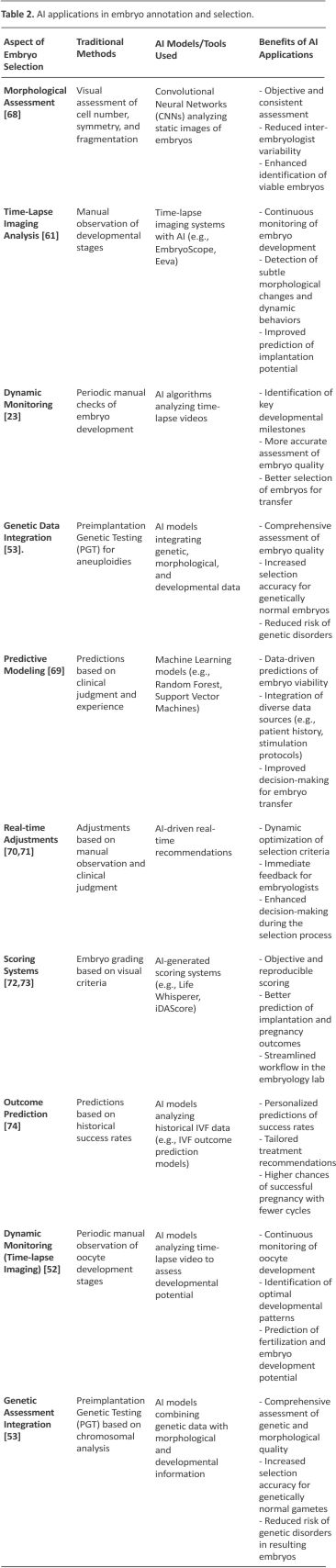
Table 2 provides a comprehensive overview of how AI models and tools are being used to enhance various aspects of embryo annotation and selection, improving precision, objectivity, and overall IVF outcomes.
Consistent quality control in IVF laboratories is crucial for maintaining high standards and ensuring the success of assisted reproductive technologies 75. Quality control encompasses a range of practices to monitor and optimize laboratory conditions and procedures to achieve the best possible patient outcomes. Key performance indicators (KPIs) such as fertilization rates, blastocyst formation rates, and clinical pregnancy rates are essential metrics that reflect the laboratory’s performance and overall effectiveness 76. Monitoring these KPIs allows laboratories to identify improvement areas, ensuring that all IVF processes function optimally. High standards in quality control are not only critical for achieving successful pregnancies but also for maintaining patient trust and adhering to regulatory requirements 75.
Artificial intelligence (AI) offers significant advancements in the realm of quality control by enabling continuous monitoring and analysis of laboratory conditions and procedural outcomes 77. Machine learning (ML) algorithms can process vast amounts of data from various sources within the laboratory, including environmental sensors, procedural logs, and patient records 78. By analyzing this data, AI systems can identify patterns and deviations from established KPIs that may indicate potential issues or areas for improvement. For instance, AI can monitor environmental conditions such as temperature, humidity, and air quality within the laboratory to ensure they remain within optimal ranges for gamete and embryo culture. Any deviations from these parameters can be immediately flagged, allowing laboratory staff to take corrective actions before these conditions negatively impact the IVF outcomes. Additionally, AI can track procedural adherence, ensuring that protocols are followed consistently, which is crucial for maintaining the quality and viability of gametes and embryos.
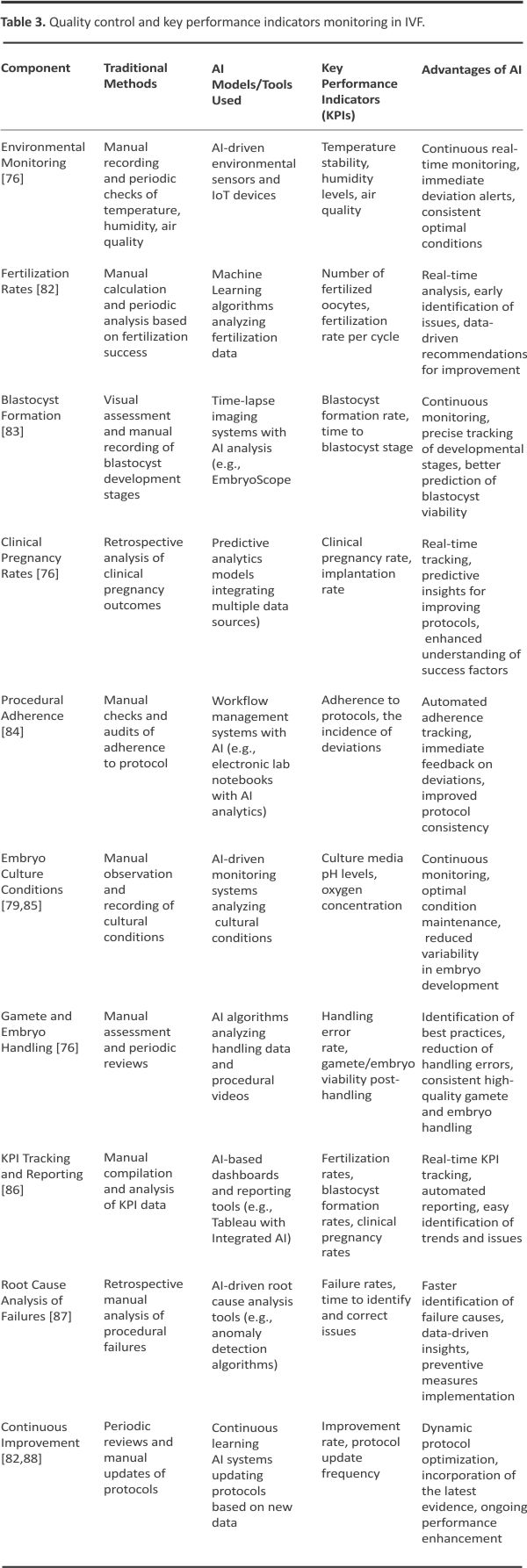
AI-driven quality control systems can also provide real-time feedback and recommendations based on the analysis of KPI data 79. For example, if fertilization rates are observed to be below expected levels, AI algorithms can analyze procedural data to identify potential causes, such as variations in sperm or oocyte handling techniques, and suggest modifications to improve outcomes 32. Similarly, if blastocyst formation rates are suboptimal, AI can recommend adjustments in culture conditions or protocols based on historical data and current trends 20. By continuously monitoring and optimizing laboratory conditions and procedures, AI helps ensure that each IVF process is performed to the highest standards 9,80. This enhances the likelihood of successful pregnancies and reduces errors and variability, ultimately contributing to better patient outcomes and increased confidence in IVF treatments. Furthermore, AI’s ability to analyze complex datasets and provide actionable insights can support ongoing improvements in laboratory practices. Continuous learning and adaptation of AI algorithms based on new data can drive innovations and refine IVF protocols, ensuring that laboratories remain at the forefront of assisted reproductive technologies 81. This dynamic approach to quality control, underpinned by AI, represents a significant advancement in pursuing excellence in IVF outcomes, as highlighted in Table 3.
Efficient scheduling and workflow management are critical in busy IVF laboratories, where the timely execution of procedures is paramount for maintaining the quality of gametes and embryos 89. Delays or inefficiencies in the workflow can lead to suboptimal conditions, which may negatively impact fertilization rates, embryo development, and overall IVF success rates. Common challenges include coordinating multiple procedures that need to occur within specific time windows, managing the availability of laboratory staff and equipment, and responding to unexpected changes, such as equipment failures or variations in patient needs. Inefficient scheduling can result in extended waiting times, increased stress for patients and staff, and potentially lower clinical outcomes 90.
Artificial intelligence (AI) offers transformative potential for optimizing scheduling and workflow management in IVF laboratories 11. By analyzing historical data and real-time workflow patterns, AI can predict the optimal timing for various procedures, ensuring that each step is carried out at the most appropriate moment. This optimization can significantly reduce waiting times and enhance the timely handling of gametes and embryos, ultimately improving laboratory efficiency and success rates. AI can analyze extensive datasets from past cycles to identify patterns and bottlenecks in the workflow. By understanding these patterns, AI algorithms can forecast busy periods and allocate resources accordingly 91. This ensures that critical procedures, such as oocyte retrieval, fertilization, and embryo transfer, are performed without unnecessary delays 92. For example, AI can predict peak times for laboratory activities and suggest optimal staff scheduling to meet these demands.
Machine learning (ML) algorithms can predict the best timing for each procedure based on various factors, including patient-specific data, laboratory conditions, and historical outcomes. This predictive capability ensures that procedures are scheduled when conditions are most favorable, enhancing the quality of gametes and embryos 41. For instance, AI can determine the optimal time for oocyte retrieval based on the maturation status of the follicles, ensuring that oocytes are collected at their peak quality 21. AI-driven scheduling tools can adapt to unexpected changes, such as equipment malfunctions or sudden shifts in patient conditions. By continuously monitoring the workflow and available resources, AI can make real-time adjustments to the schedule, ensuring that disruptions are minimized. This adaptability is crucial in maintaining smooth operations and avoiding delays that could compromise the quality of the IVF process 57.
AI can also optimize the allocation of laboratory resources, including staff, equipment, and lab space. By predicting the needs for each procedure and ensuring that resources are available when needed, AI helps avoid overbooking and underutilization. This efficient allocation not only improves workflow but also enhances the working environment for laboratory staff, reducing stress and potential errors. Several AI-driven scheduling tools are being developed and implemented in IVF laboratories 93. These tools utilize advanced algorithms to create dynamic schedules that can be adjusted in real-time based on changing conditions. For example, AI platforms can integrate data from patient management systems, laboratory information systems, and real-time monitoring devices to provide comprehensive scheduling solutions. These platforms offer features such as automatic rescheduling in response to delays, predictive analytics for resource planning, and real-time alerts for staff and patients.
AI-driven scheduling reduces waiting times by optimizing the schedule and ensuring the timely execution of procedures. This improves the overall patient experience and reduces the stress associated with the IVF process 94. Timely handling of gametes and embryos ensures they are maintained optimally, enhancing their quality and viability. This can lead to higher fertilization rates, better embryo development, and increased success rates for IVF cycles 25. Enhanced laboratory efficiency is another significant benefit of AI-driven scheduling. By streamlining the workflow, reducing bottlenecks, and improving overall efficiency, laboratories can handle a higher volume of cycles without compromising quality. AI’s ability to adapt to unexpected changes ensures that the laboratory can respond quickly to disruptions, maintaining smooth operations and minimizing delays. Additionally, AI optimizes the allocation of resources, ensuring that staff, equipment, and lab space are used efficiently, reducing waste, and enhancing productivity.
8. Challenges of AI application in IVF
The application of artificial intelligence (AI) in in-vitro fertilization (IVF) presents significant challenges that must be addressed before widespread clinical adoption 93. One major issue is the lack of large-scale clinical validation. Many AI models in IVF are developed and tested on small, single-center datasets, which limits their generalizability. These studies are often conducted in highly controlled environments with relatively homogeneous patient populations, lacking diversity in real-world clinical settings. Without robust, multi-center, randomized controlled trials that validate these models across various patient demographics and clinical contexts, the efficacy and safety of AI-driven tools remain uncertain. For instance, while some studies suggest AI improves embryo selection accuracy, few provide long-term outcome data, such as live birth rates or the health of children born through AI-guided IVF.
One reason for inconsistent findings across different centers is the lack of standardized recording and reporting practices. Variations in how data is collected, interpreted and reported can lead to discrepancies in AI performance and make it difficult to compare results across studies. For example, centers may use different criteria for evaluating embryo quality or success rates, which can influence AI model training and results. Establishing a consensus on standardized data collection, detailed recording of IVF outcomes, and uniform reporting protocols for AI applications in IVF would help ensure consistency and allow for more reliable cross-center comparisons. Such standardization would enable a more precise evaluation of AI’s effectiveness across different clinical environments.
Another significant challenge is bias in the datasets used to train AI models. AI relies heavily on historical data to identify patterns and make predictions 95. If the data used to train these algorithms does not represent the broader population, it can introduce significant bias, resulting in inequitable treatment outcomes. For example, most AI models in IVF have been developed using data from predominantly Western populations, which may not accurately reflect the diversity of reproductive health issues across different ethnicities, age groups, or socio-economic backgrounds. This bias could lead to unequal success rates, where certain patient groups benefit more from AI-guided treatment than others. Addressing this requires the development of more diverse and representative datasets encompassing a more comprehensive range of patient demographics and regular auditing of AI systems to identify and correct bias. The failure to mitigate these biases risks perpetuating health disparities in reproductive medicine.
Data privacy and security are also critical concerns in the application of AI in IVF. Given that AI systems require access to large datasets, including sensitive personal and genetic information, the potential for data breaches or misuse is a significant ethical concern 96. Patients undergoing IVF are already in a vulnerable position, and the improper handling of their data could lead to privacy violations, discrimination, or other harm. Current regulatory frameworks such as the General Data Protection Regulation (GDPR) in Europe and the Health Insurance Portability and Accountability Act (HIPAA) in the United States offer guidance on protecting patient information, but the use of AI necessitates even stricter protocols 97,98,99. The integration of AI into clinical practice demands robust encryption methods, secure storage solutions, and strict access controls to safeguard patient data at every stage of the process.
In addition to privacy concerns, ethical transparency remains a crucial challenge in AI-driven IVF. Many AI algorithms function as “black boxes,” meaning that their decision-making processes are not easily interpretable by clinicians or patients 100,101. This lack of transparency can lead to challenges in clinical practice, where healthcare providers may struggle to explain or justify AI-driven recommendations to patients. For example, suppose an AI model suggests the selection of one embryo over another without a clear rationale. In that case, it may be difficult for clinicians to gain patient trust or confidence. Moreover, AI algorithms typically base their recommendations on statistical patterns rather than considering individual patient preferences, lifestyle factors, or other clinical nuances that human judgment might factor into decision-making. This can result in over-reliance on AI systems, where clinicians follow AI recommendations without thoroughly evaluating their relevance or applicability to the patient’s case 96,102. Developing more interpretable AI models and ensuring clinicians are trained to critically assess AI-generated outputs in the context of their professional expertise are essential.
9. Conclusion
Artificial intelligence (AI), machine learning (ML), and deep learning (DL) have the potential to significantly transform in-vitro fertilization (IVF) practices by providing objective, data-driven tools that enhance various stages of the IVF process. These technologies can personalize ovarian stimulation protocols, ensuring that each patient receives the most effective treatment based on their unique characteristics. By optimizing gamete selection through precise assessments of sperm and oocyte quality, AI can improve fertilization rates and embryo viability. Additionally, AI-driven embryo selection can lead to higher implantation success rates, reducing the number of cycles required to achieve pregnancy and thus lowering the emotional and financial burdens on patients 39. Integrating AI into quality control and workflow optimization further enhances the efficiency and effectiveness of IVF laboratories. AI’s ability to continuously monitor and analyze key performance indicators (KPIs) helps maintain high standards and consistent outcomes. Moreover, AI-driven scheduling and resource management can streamline laboratory operations, minimizing delays and ensuring the timely handling of gametes and embryos.
Despite the promising benefits, the application of AI in IVF must be approached with careful consideration of ethical implications. Ensuring data privacy and security is paramount to protect sensitive patient information. AI algorithms must be trained on diverse datasets to avoid biases and ensure fairness and inclusivity in care. Regular audits and updates of AI models are necessary to maintain their accuracy and mitigate any emerging biases. Continued research and development are crucial to refine AI technologies further and to validate their efficacy in clinical settings. Collaborative efforts between AI experts, reproductive endocrinologists, embryologists, and ethicists will be essential to address the challenges and maximize the potential of AI in IVF. By adhering to ethical standards and continuously improving AI applications, the IVF field can offer more effective, equitable, and efficient treatments, ultimately enhancing the overall success rates and patient experiences in assisted reproductive technology.
Declaration of competing interest
The authors declare that they have no known competing financial interests or personal relationships that could have appeared to influence the work reported in this paper.
References
1. S. Fishel. First in vitro fertilization baby— This is how it happened Fertil Steril, 110 (1) (2018), pp. 5-11
2. M.E. Graham, A. Jelin, A.H. Hoon Jr, A.M. Wilms Floet, E. Levey, E.M Graham Assisted reproductive technology: short-and long-term outcomes Dev Med Child Neurol, 65 (1) (2023), pp. 38-49
3. R. Klitzman. Unconventional combinations of prospective parents: ethical challenges faced by IVF providers BMC Med Ethics, 18 (2017), pp. 1-13
4. S. Ferber, N.J. Marks, V. Mackie IVF and assisted reproduction Springer (2020)
5. M.M. Alper, B.C. Fauser. Ovarian stimulation protocols for IVF: is more better than less? Reprod Biomed Online, 34 (4) (2017), pp. 345-353
6. M. Razafintsalama-Bourdet, M. Bah, G. Amand, L. Vienet-Lègue, C. Pietin-Vialle, H. Bry-Gauillard, et al. Random antral follicle count performed on any day of the menstrual cycle has the same predictive value as AMH for good ovarian response in IVF cycles, J Gynecol Obstet Hum Reprod, 51 (1) (2022), Article 102233
7. P.R. Jirge, M.M. Patil, R. Gutgutia, J. Shah, M. Govindarajan, V.S. Roy, et al. Ovarian stimulation in assisted reproductive technology cycles for varied patient profiles: an Indian perspective J Hum Reprod Sci, 15 (2) (2022), pp. 112-125
8. K. Palinska-Rudzka, R. Mathur. Principles of controlled ovarian stimulation for assisted reproduction. Obstet Gynaecol Reprod Med, 33 (4) (2023), pp. 91-96
9. C. Canon, L. Leibner, M. Fanton, Z. Chang, V. Suraj, J.A. Lee, et al. Optimizing oocyte yield utilizing a machine learning model for dose and trigger decisions, a multi-center, prospective study Sci Rep, 14 (1) (2024 20), p. 18721. https:// www.nature.com/articles/ s41598-024-69165-1
10. M. Fanton, V. Nutting, F. Solano, P. Maeder-York, E. Hariton, O. Barash, et al. An interpretable machine learning model for predicting the optimal day of trigger during ovarian stimulation Fertil Steril, 118 (1) (2024), pp. 101-108. https://www. sciencedirect.com/science/article/pii/ S0015028222002448
11. G. Letterie, A. MacDonald, Z. Shi. An artificial intelligence platform to optimize workflow during ovarian stimulation and IVF: process improvement and outcome-based predictions Reprod Biomed Online, 44 (2) (2022), pp. 254-260
12. I. Oseguera-López, S. Ruiz-Díaz, P. Ramos-Ibeas, S. Pérez-Cerezales. Novel techniques of sperm selection for improving IVF and ICSI outcomes. Front Cell Dev Biol, 7 (2019), p. 298
13. J.B. Chorya, T.V. Sutaria, R.K. Chaudhari, C.F. Chaudhari. Impact of gamete health on fertilization and embryo development: an overview Asian Pac J Reprod, 11 (5) (2022), pp. 201-207
14. A. Konar. Artificial intelligence and soft computing: behavioral and cognitive modeling of the human brain CRC press (2018)
15. J. Alzubi, A. Nayyar, A. Kumar. Machine learning from theory to algorithms: an overview. J Phys Conf Ser (2018), Article 012012
16. I.H. Sarker. Deep learning: a comprehensive overview on techniques, taxonomy, applications and research directions. SN Comput Sci, 2 (6) (2021), p. 420
17. R. Najjar. Redefining radiology: a review of artificial intelligence integration in medical imaging Diagnostics, 13 (17) (2023), p. 2760
18. J.M. Raimundo, P. Cabrita. Artificial intelligence in assisted reproductive technology Procedia Comput Sci, 181 (2021), pp. 442-447
19. A. Goyal, M. Kuchana, K.P.R. Ayyagari. Machine learning predicts live-birth occurrence before in-vitro fertilization treatment. Sci Rep, 10 (1) (2020), p. 20925
20. D. Cimadomo, V. Chiappetta, F. Innocenti, G. Saturno, M. Taggi, A. Marconetto, et al. Towards automation in IVF: pre-clinical validation of a deep learning-based embryo grading system during PGT-A cycles. J Clin Med, 12 (5) (2023), p. 1806
21. E. Hariton, Z. Pavlovic, M. Fanton, V.S. Jiang. Applications of artificial intelligence in ovarian stimulation: a tool for improving efficiency and outcomes. Fertil Steril, 120 (1) (2023), pp. 8-16
22. V.W. Fitz, M.K. Kanakasabapathy, P. Thirumalaraju, H. Kandula, L.B. Ramirez, L. Boehnlein, et al. Should there be an “AI” in TEAM? Embryologists’ selection of high implantation potential embryos improves with the aid of an artificial intelligence algorithm, J Assist Reprod Genet, 38 (2021), pp. 2663-2670
23. M.F. Kragh, H. Karstoft. Embryo selection with artificial intelligence: how to evaluate and compare methods? J Assist Reprod Genet, 38 (7) (2021), pp. 1675-1689
24. P. Cherouveim, C. Velmahos, C.L. Bormann. Artificial intelligence for sperm selection— A systematic review. Fertil Steril, 120 (1) (2023), pp. 24-31
25. H.L. Khan, S. Khan, S. Bhatti, S. Abbas. Role of artificial intelligence in quality assurance in ART: a review. Fertil Reprod, 5 (01) (2023), pp. 1-7
26. D.K. Gardner. The way to improve ART outcomes is to introduce more technologies in the laboratory. Reprod Biomed Online, 44 (3) (2022), pp. 389-392
27. G.N. Allahbadia, Y. Morimoto. Ovarian stimulation protocols Springer (2016)
28. D. Glujovsky, R. Pesce, M. Miguens, C.E. Sueldo, K. Lattes, A Ciapponi. How effective are the non-conventional ovarian stimulation protocols in ART? A systematic review and meta-analysis. J Assist Reprod Genet, 37 (12) (2020), pp. 2913-2928
29. B.W. Mol, P.M. Bossuyt, S.K. Sunkara, J.A.G. Velasco, C. Venetis, D. Sakkas, et al. Personalized ovarian stimulation for assisted reproductive technology: study design considerations to move from hype to added value for patients. Fertil Steril, 109 (6) (2018), pp. 968-979
30. B. Doroftei, O.D. Ilie, N. Anton, O.A. Marcu. Scripcariu IS, Ilea C. A narrative review discussing the efficiency of personalized dosing algorithm of follitropin delta for ovarian stimulation and the reproductive and clinical outcomes. Diagnostics, 13 (2) (2023), p. 177
31. T. Haahr, S.C. Esteves, P. Humaidan. Individualized controlled ovarian stimulation in expected poor-responders: an update. Reprod Biol Endocrinol, 16 (2018), pp. 1-9
32. R. AlSaad, A. Abd-Alrazaq, F. Choucair, A. Ahmed, S. Aziz, J. Sheikh. Harnessing artificial intelligence to predict ovarian stimulation outcomes in in vitro fertilization: scoping review J Med
33. C.L. Curchoe, C.L. Bormann. Artificial intelligence and machine learning for human reproduction and embryology presented at ASRM and ESHRE 2018. J Assist Reprod Genet, 36 (2019), pp. 591-600
34. C. Siristatidis, S. Stavros, A. Drakeley, S. Bettocchi, A. Pouliakis, P. Drakakis, et al. Omics and artificial intelligence to improve in vitro fertilization (IVF) success: a proposed protocol Diagnostics, 11 (5) (2021), p. 743
35. M. Mann, C. Kumar, W.F. Zeng, M.T. Strauss Artificial intelligence for proteomics and biomarker discovery Cell Syst, 12 (8) (2021), pp. 759-770.
36. K. Zieliński, S. Pukszta, M. Mickiewicz, M. Kotlarz, P. Wygocki, M. Zieleń, et al. Personalized prediction of the secondary oocytes number after ovarian stimulation: a machine learning model based on clinical and genetic data PLoS Comput Biol, 19 (4) (2023), Article e1011020
37. A. Cesario, M. D’Oria, F. Bove, G. Privitera, I. Boškoski, D. Pedicino, et al. Personalized clinical phenotyping through systems medicine and artificial intelligence. J Pers Med, 11 (4) (2021), p. 265
38. R.D. Rezaeiye, A. Mehrara, A.M.A. Pour, J. Fallahi, S. Forouhari. Impact of various parameters as predictors of the success rate of in vitro fertilization. Int J Fertil Steril, 16 (2) (2022), p. 76
39. L.C. Martínez, L. Murria, M.Á. Valera, A. Cobo, M. Meseguer. Testing the ability of an artificial intelligence (AI) algorithm in predicting implantation and ongoing pregnancy potential of vitrified-warmed blastocysts from a single image. Fertil Steril, 120 (4) (2023). https:// www.fertstert.org/article/S0015-0282(23)00909-3/abstract
40. S. Ozturk. Selection of competent oocytes by morphological criteria for assisted reproductive technologies. Mol Reprod Dev, 87 (10) (2020), pp. 1021-1036
41. S. Hanassab, A. Abbara, A.C. Yeung, M. Voliotis, K. Tsaneva-Atanasova, T.W. Kelsey, et al. The prospect of artificial intelligence to personalize assisted reproductive technology. npj Digit Med, 7 (1) (2024), p. 55
42. Dias T.R., Cho C.L., Agarwal A. Sperm assessment: traditional approaches and their indicative value. In vitro fertilization: a textbook of current and emerging methods and devices. 2019;249–63.
43. G. Marzano, M.S. Chiriacò, E. Primiceri, M.E. Dell’Aquila, J. Ramalho-Santos, V. Zara, et al. Sperm selection in assisted reproduction: a review of established methods and cutting-edge possibilities. Biotechnol Adv, 40 (2020), Article 107498
44. J.B. You, C. McCallum, Y. Wang, J. Riordon, R. Nosrati, D. Sinton. Machine learning for sperm selection Nat Rev Urol, 18 (7) (2021), pp. 387-403
45. S.A. Hicks, J.M. Andersen, O. Witczak, V. Thambawita, P. Halvorsen, H.L. Hammer, et al. Machine learning-based analysis of sperm videos and participant data for male fertility prediction Sci Rep, 9 (1) (2019), p. 16770
46. L. Spencer, J. Fernando, F. Akbaridoust, K. Ackermann, R Nosrati Ensembled deep learning for the classification of human sperm head morphology Adv Intell Syst, 4 (10) (2022), Article 2200111
47. S. Shahali, M. Murshed, L. Spencer, O. Tunc, L. Pisarevski, J. Conceicao, et al. Morphology classification of live unstained human sperm using ensemble deep learning Adv Intell Syst (2024), Article 2400141
48. M. Conti, F. Franciosi. Acquisition of oocyte competence to develop as an embryo: integrated nuclear and cytoplasmic events. Hum Reprod Update, 24 (3) (2018), pp. 245-266
49. Y. Lemseffer, M.E. Terret, C. Campillo, E. Labrune. Methods for assessing oocyte quality: a review of literature Biomedicines, 10 (9) (2022), p. 2184
50. B. Balaban, I. Keles, T. Ebner. Morphological assessment of oocyte quality. Man Oocyte Retr Prep Hum Assist Reprod (2022), p. 85
51. K. Si, B. Huang, L. Jin. Application of artificial intelligence in gametes and embryo selection. Hum Fertil, 26 (4) (2023), pp. 757-777
52. P. Bhide, D.Y. Chan, D. Lanz, O. Alqawasmeh, E. Barry, D. Baxter, et al. Clinical effectiveness and safety of time-lapse imaging systems for embryo incubation and selection in in-vitro fertilisation treatment (TILT): a multicentre, three-parallel-group, double-blind, randomised controlled trial. Lancet, 404 (10449) (2024), pp. 256-265
53. J. Buldo-Licciardi, M.J. Large, D.H. McCulloh, C. McCaffrey, J.A. Grifo. Utilization of standardized preimplantation genetic testing for aneuploidy (PGT-A) via artificial intelligence (AI) technology is correlated with improved pregnancy outcomes in single-thawed euploid embryo transfer (STEET) cycles. J Assist Reprod Genet, 40 (2) (2023), pp. 289-299
54. B. Aydin, D. Hudkova, C. Halicigil. Maximizing donor egg efficiency: artificial intelligence and genetically certified oocytes Cryopreservation. Z.P. Nagy, A.C. Varghese, A Agarwal (Eds.), Assisted reproduction: a practitioner’s guide to methods, management and organization [Internet], Springer International Publishing, Cham (2024), pp. 471-490, 10.1007/978-3-031-58214-1_48
55. D. Celebi, A.D. Omur, S.A. Akarsu. Celbis SC, Baser S. Artificial intelligence in gamete cell selection and semen microbiologic analysis. J Clin Vet Res, 2 (2) (2022)
56. A.F.S. Farías, D. Sakkas, A. Chávez-Badiola, O. Ocali, G. Mendizabal, R. Valencia, et al. Single-sperm motility analysis during ICSI using an artificial intelligence sperm identification software (SID) and correlation with morphology. Fertil Steril, 118 (4) (2022), pp. e56-e57
57. G. Letterie. Artificial intelligence and assisted reproductive technologies: 2023. Ready for prime time? Or not. Fertil Steril, 120 (1) (2023), pp. 32-37
58. S.T. Young, W.L. Tzeng, Y.L. Kuo, M.L. Hsiao, S.R. Chiang. Real-time tracing of spermatozoa IEEE Eng Med Biol Mag, 15 (6) (1996), pp. 117-120. https://ieeexplore. ieee.org/abstract/document/544519/?casa_token=GpP9AUPYZ_IAAAAA:86t9dMCGNa5M003wdfi5aUrK28h06ylMzH2bqZ3J0z3jOcaP-bzEKv23-sMqpvYn1 TznvcmW
59. F. Itoi, T. Miyamoto, T. Himaki, H. Honnma, M. Sano, J. Ueda. Importance of real-time measurement of sperm head morphology in intracytoplasmic sperm injection. Zygote, 30 (1) (2022), pp. 9-16 https://www. cam bridge.org/core/journals/zygote/ article/importance-of-realtime-measurement-of-sperm-head-morphology-in-intracytoplasmic-sperm-injection/7C10CF2237C9 970EFC132D38EC AAC11E
60. M. Feyeux, A. Reignier, M. Mocaer, J. Lammers, D. Meistermann, P. Barrière, et al. Development of automated annotation software for human embryo morphokinetics. Hum Reprod, 35 (3) (2020), pp. 557-564
61. J. Berntsen, J. Rimestad, J.T. Lassen, D. Tran, M.F Kragh. Robust and generalizable embryo selection based on artificial intelligence and time-lapse image sequences. PLoS One, 17 (2) (2022), Article e0262661
62. B.S. Harris, K.C. Bishop, J.A. Kuller, S. Alkilany, T.M. Price. Preimplantation genetic testing: a review of current modalities. F S Rev, 2 (1) (2021), pp. 43-56
63. T. Stankewicz. Optimising IVF by controlling for both embryonic aneuploidy and endometrial receptivity using genetic testing. University of Kent (United Kingdom, 2021)
64. Kort J., Behr B. Traditional embryo morphology evaluation: from the zygote to the blastocyst stage. In vitro fertilization: a textbook of current and emerging methods and devices. 2019; 493–504.
65. R. Sciorio, M. Meseguer. Focus on time-lapse analysis: blastocyst collapse and morphometric assessment as new features of embryo viability Reprod Biomed Online, 43 (5) (2021), pp. 821-832
66. Z. Rosenwaks, A.H. Handyside. Is preimplantation genetic testing for aneuploidy an essential tool for embryo selection or a costly ‘add-on’of no clinical benefit? Fertil Steril, 110 (3) (2018), pp. 351-352.
67. J. Berntsen, J. Rimestad, J.T. Lassen, D. Tran, M.F. Kragh. Robust and generalizable embryo selection based on artificial intelligence and time-lapse image sequences. PLoS One, 17 (2) (2022), Article e0262661. https://journals.plos.org/plosone/ article?id=10.1371/journal.pone.0262661
68. e Z ul. M. Ishaq, S. Raza, H. Rehar, S. Abadeen, D. Hussain, R.A. Naqvi, et al. Assisting the human embryo viability assessment by deep learning for in vitro fertilization. Mathematics, 11 (9) (2023), p. 2023
69. I. Dimitriadis, N. Zaninovic, A.C. Badiola, C.L. Bormann. Artificial intelligence in the embryology laboratory: a review Reprod Biomed Online, 44 (3) (2022), pp. 435-448.
70. J. Stegmaier, F. Amat, W.C. Lemon, K. McDole, Y. Wan, G. Teodoro, et al. Real-time three-dimensional cell segmentation in large-scale microscopy data of developing embryos. Dev Cell, 36 (2) (2016), pp. 225-240. https://www.cell. com/developmental-cell/fulltext /S1534-5807(15)00837-0
71. K. Lundin, H. Park. Time-lapse technology for embryo culture and selection Ups J Med Sci, 125 (2) (2020), pp. 77-84. https://ujms.net/ index.php/ujms/article/view/5629.
72. A. Chavez-Badiola, A. Flores-Saiffe-Farías, G. Mendizabal-Ruiz, A.J. Drakeley, J. Cohen Embryo ranking intelligent classification algorithm (ERICA): artificial intelligence clinical assistant predicting embryo ploidy and implantation. Reprod Biomed Online, 41 (4) (2020), pp. 585-593. https://www.sciencedirect.com/ science/article/pii/S1472648320 303734?casa_token=jM2SA9P-Ji8AAAAA: C8UFa-LeFSxiUz37Ly 1owL_ZAjDoQ5Jih_ goblqsJq _NKiOe7MH5BSbWgMObLU6mYdhMNWaf
73. S. Ueno, J. Berntsen, M. Ito, T. Okimura, K. Kato. Correlation between an annotation-free embryo scoring system based on deep learning and live birth/neonatal outcomes after single vitrified-warmed blastocyst transfer: a single-centre, large-cohort retrospective study. J Assist Reprod Genet, 39 (9) (2022), pp. 2089-2099. https://link. springer.com/10.1007/s10815-022-02562-5
74. S. De Gheselle, C. Jacques, J. Chambost, C. Blank, K. Declerck, I. De Croo, et al. Machine learning for prediction of euploidy in human embryos: in search of the best-performing model and predictive features. Fertil Steril,117(4) (2022), pp.738-746. https://www.science direct. com/science/article/pii/ S001502822102238X
75. P. Durai. Quality control in the assisted reproductive technology laboratory. CRC Press (2024)
76. G. Fabozzi, D. Cimadomo, R. Maggiulli, A. Vaiarelli, F.M. Ubaldi, L. Rienzi. Which key performance indicators are most effective in evaluating and managing an in vitro fertilization laboratory? Fertil Steril, 114 (1) (2020), pp. 9-15.
77. Q.U. Ain, R. Nazir, A. Nawaz, H. Shahbaz, A. Dilshad, I.U. Mufti, et al. Machine Learning Approach towards Quality Assurance, Challenges and Possible Strategies in Laboratory Medicine. J Clin Transl Pathol, 4 (2) (2024), pp. 76-87.
78. A.M. Rahmani, E. Yousefpoor, M.S. Yousefpoor, Z. Mehmood, A. Haider, M. Hosseinzadeh, et al. Machine learning (ML) in medicine: review, applications, and challenges Mathematics, 9 (22) (2021), p. 2970
79. C.L. Bormann, C.L. Curchoe, P. Thirumalaraju, M.K. Kanakasabapathy, R. Gupta, R. Pooniwala, et al. Deep learning early warning system for embryo culture conditions and embryologist performance in the ART laboratory. J Assist Reprod Genet, 38 (7) (2021), pp. 1641-1646
80. S. Tamir. Artificial intelligence in human reproduction: charting the ethical debate over AI in IVF AI Ethics, 3 (3) (2023), pp. 947-961
81. S. Medenica, D. Zivanovic, L. Batkoska, S. Marinelli, G. Basile, A. Perino, et al. The future is coming: artificial intelligence in the treatment of infertility could improve assisted reproduction outcomes—The value of regulatory frameworks. Diagnostics, 12 (12) (2022), p. 2979
82. E.R. Hammond, D.E. Morbeck. Tracking quality: can embryology key performance indicators be used to identify clinically relevant shifts in pregnancy rate? Hum Reprod, 34 (1) (2019), pp. 37-43
83. Wang H tian, Hong P ping, Li H yang, W. Zhou, T Li. Use of a new set of key performance indicators for evaluating the performance of an in vitro fertilization laboratory in which blastocyst culture and the freeze-all strategy are the primary treatment in patients with in vitro fertilization. J Int Med Res, 49 (9) (2021), Article 03000605211044364
84. R. Di Paola, A. Cuccarollo, S. Garzon. Risk, safety, and outcome monitoring in the IVF clinic Management of infertility, Elsevier (2023), pp. 397-404. https://www.science direct.com/science/article/pii/ B9780323 899079000089
85. Zaca C., Borini A., Coticchio G. Laboratory monitoring for embryo culture. Manual of embryo culture in human assisted reproduction. https://books.google.com /books?hl=en&lr=&id=a3IqEAAAQBAJ&oi=fnd&pg=PA84&dq=Quality+Control+and+Key+Performance+Indicators+Monitoring+in+IVF+Embryo+Culture+Conditions&ots=ShuiWM_MtI&sig=BhuV6RgiQBuLNmAjs5bheNbBDKA.
86. J.G. Franco Jr, C.G. Petersen, A.L. Mauri, L.D. Vagnini, A. Renzi, B. Petersen, et al. Key performance indicators score (KPIs-score) based on clinical and laboratory parameters can establish benchmarks for internal quality control in an ART program. JBRA Assist Reprod, 21 (2) (2017), p. 61. https://www.ncbi. nlm.nih.gov/pmc/articles/PMC 5473694/
87. D. Li, Y. Gao. Introduction of quality control and risk management in the IVF laboratory. Qual Manag Assist Reprod Lab (2024), pp. 1-17
88. Doody K., Calhaz-Jorge C., Smeenk J. Quality data to assure improved clinical of ART care practice: using. Assisted reproductive technology surveillance: https://books. google.com/books?hl=en&lr=&id=dIOWDwAAQBAJ&oi=fnd&pg=PA69&dq=Quality+Control+and+Key+Performance+Indicators+Monitoring+in+IVF+Continuous+Improvement&ots=8ocSTxGw2H&sig=gw71OQflBBkJw16WtFg6V82Vqqs.
89. J. Cohen, M. Alikani, A Gilligan. Updated guidelines for setting up an assisted reproductive technology laboratory. Textbook of assisted reproductive techniques, CRC Press (2023), pp. 1-8
90. J. Passet-Wittig, M. Bujard. Medically assisted reproduction in developed countries: overview and societal challenges. Res Handb Sociol Fam (2021), pp. 417-438
91. Z.J. Pavlovic, V.S. Jiang, E. Hariton. Current applications of artificial intelligence in assisted reproductive technologies through the perspective of a patient’s journey. Curr Opin Obstet Gynecol, 36 (4) (2024), pp. 211-217.
92. N. Zaninovic, O. Elemento, Z. Rosenwaks. Artificial intelligence: its applications in reproductive medicine and the assisted reproductive technologies. Fertil Steril, 112 (1) (2019), pp. 28-30
93. D.J.X. Chow, P. Wijesinghe, K. Dholakia, K.R. Dunning.Does artificial intelligence have a role in the IVF clinic? Reprod Fertil, 2 (3) (2021), pp. C29-C34
94. T.L.D. Health. Enhancing the success of IVF with artificial intelligence, Lancet, 5 (2023). Digital health
95. W. Liang, G.A. Tadesse, D. Ho, L. Fei-Fei, M. Zaharia, C. Zhang, et al. Advances, challenges and opportunities in creating data for trustworthy AI Nat Mach Intell, 4 (8) (2022), pp. 669-677. https:// www.nature.com/articles/s42256-022-00516-1
96. M.A.M. Afnan, C. Rudin, V. Conitzer, J. Savulescu, A. Mishra, Y. Liu, et al. Ethical implementation of artificial intelligence to select embryos in in vitro fertilization. Proceedings of the 2021 AAAI/ACM conference on AI, ethics, and society, ACM (2021), pp. 316-326. https://dl. acm.org/doi/10.1145/3461702.3462 589
97. I. Silva, M. Soto. Privacy-preserving data sharing in healthcare: an in-depth analysis of big data solutions and regulatory compliance. Int J Appl Health Care Anal, 7 (1) (2022), pp. 14-23. http://norislab.com/ index.php/IJAHA/article/ view/39
98. A. Panesar. Precision health and artificial intelligence: with privacy, ethics, bias, health equity, best practices, and case studies. Apress, Berkeley, CA (2023). https://link. springer.com/10.1007/978-1-4842-9162-7
99. Frank E., Olaoye G. Privacy and data protection in AI-enabled healthcare systems.2024 https://www. researchgate.net/profile/Edwin-Frank/publication/378287462_ Privacy_and_data_protection_in_AI-enabled_healthcare _systems/ links/65d0dc54476dd15fb343ff84/Privacy-and-data-protection-in-AI-enabled-healthcare-systems. pdf.
100.D. GhoshRoy, P.A., Alvi, K.C., Santosh. AI tools for assessing human fertility using risk factors: a state-of-the-art review. J Med Syst, 47 (1) (2023), p. 91. https://idp.springer.com/ authorize/casa?redirect_uri=https://link.springer.com/article/10. 1007/s10916-023-01983-8&casa _token=NrqwKnfxLzkAAAAA: 2cONbCFL6tXtn8EpGZ6GT37AIJEowqtRvKaynQJQ–MQPaQjiWaf29XmGJ37xoYViYZIXPI_TK4OHHo
101.A. De, S. Saraf, T.K. Mishra, B.K. Tripathy. Interpretation and visualization techniques in AI systems and applications. Explainable, interpretable, and transparent AI systems, CRC Press (2024), pp. 279-301. https://w.w.w. taylorfrancis.com/chapters/edit/10.1201/9781003442509-16/inter pretation-visualization-techniques-ai-systems-applications-arka-de-sameeksha-saraf-tusar-kanti-mishra-tripathy
102.H. Alolabi, C.C.J. Aarthy. Ethical challenges presented by advanced artificial intelligence in diagnostics and treatment recommendations. J Empir Soc Sci Stud, 5 (1) (2021), pp. 30-47. https://publications.dlpress. org/index.php/jesss/article/view/31
Credit: Olawade DB, Teke J, Adeleye KK, Weerasinghe K, Maidoki M, Clement David-Olawade A. Artificial intelligence in in-vitro fertilization (IVF): A new era of precision and personalization in fertility treatments. J Gynecol Obstet Hum Reprod. 2025 Mar;54(3):102903. doi: 10.1016/ j.jogoh.2024.102903. Epub 2024 Dec 27. PMID: 39733809.